Leaders may find it easy to try to control the change process.
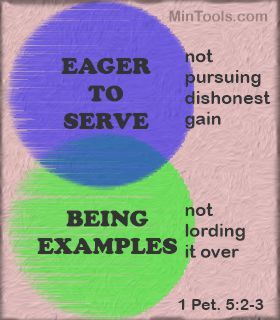
God, however, wants us to be servants who lead by example, facilitating the process rather than controlling it (1 Pet. 5:2-3).
Ways Leaders Might Be Controlling the Change Process
Control can come in different forms, some more subtle than others, but nonetheless controlling. It might manifest itself in the change process when we …
- fail to give people opportunity to join in praying for God’s will.
- decide what needs to be changed without getting input from others.
- tell people what they should think and feel about it rather than letting them express their opinions and preferences.
- expect compliance without opportunity to question or challenge.
- insist change gets implemented as we predetermine rather than allowing others’ creativity and unique contributions.
What’s Behind Leaders Who Tend to Control the Change Process
We can find some insight in a couple of the phrases in 1 Peter 5:2-3 as to why we might act controlling.
God exhorts leaders not to be “pursuing dishonest gain, but eager to serve” (1 Pet. 5:2). When we take something that doesn’t belong to us, we’re controlling rather than serving. We do whatever we need to to get what we want, even it it takes deceit and/or manipulation. Basically, then, we want to maintain control to get what we want, to get our way, and take the credit.
Then we’re instructed to not be “lording it over those entrusted to you, but being examples to the flock” (1 Pet. 5:3). This suggests we’re controlling when we view our position as superior to others and therefore entitled to do things our way. It’s like we see ourselves as more important than them, like we always know best, and therefore have the right to determine what needs to change and how to go about changing.
God’s Solution for Becoming Servants Not Controllers
Instead of seeking personal gain, we’re to be “eager to serve” (1 Pet. 5:20). Eagerness comes from the heart so the first step to relinquishing control is an internal change of attitude and motivation. We should pray similar to, “Search me, God, and know my heart; test me and know my anxious thoughts. See if there is any offensive way in me, and lead me in the way everlasting.” (Ps. 139:23-24)
We also need a change of perspective. We don’t have the right to control people, as those we lead have been “entrusted” to us. The flock belongs to the Lord. We are all accountable to Him so we serve as mere conduits of change, not sovereign over all.
When we have the heart of a servant, then we will lead as we should — by example rather than “lording it over” people. The change process will be a joint effort wherein we seek input and participation from others. We will be examples in turning to God for wisdom and power. We will be examples of pursuing His purposes and mission over our own.
For More on These Topics:
- Resources to Help with Change Management in the Church
- Resources to Help Leaders in Their Role as Servants
All Posts about Change Management:
- Managing Change According to Church Purpose?
- Body Life Critical to Change Management
- Body Life Provides Safeguards During Change
- Overcoming Resistance to Change
- Managing Change Well Takes Christ-like Thinking
- Managing Change Well Takes Christ-like Attitudes
- Managing Change Well Takes Christ-like Actions
- Power to Navigate Change Well
- Power of Gospel Gives Perspective in Change Management
- Grace Bookend Your Change Process?
- The Spirit Helps Us Navigate Change
- Power for Change in the Name of the Lord
- Change in His Name
- Change For His Name’s Sake
- Change Possible Because of Resurrection Power
- A Change Process Leading to Growth
- Usefulness of Scripture in Change Management
- Bible Verses to Help in the Change Process
- Need to Make Changes? First Ask, Seek, Knock.
- Guiding People to Navigate Change Well
- Servants Not Controllers of the Change Process
- Shepherds Help People Navigate Change
- Navigating Change May Require Demolishing Strongholds
Jesus says not to lord it over others.
Yes, Pete. James and John asked Jesus to let them sit each on one side of Him in glory. Jesus responded, “You know that those who are regarded as rulers of the Gentiles lord it over them, and their high officials exercise authority over them. Not so with you. Instead, whoever wants to become great among you must be your servant, and whoever wants to be first must be slave of all. For even the Son of Man did not come to be served, but to serve, and to give his life as a ransom for many.” (Mk. 10:42-45) — Jesus likens the pursuit of prominence with being controlling. Being in a position of importance doesn’t give us rights to “lord it over” people, or to be controlling.