Our biblical leadership roles affect all we do as leaders, including policy making. Take time to reflect on how our shepherding responsibilities affect the development and enforcement of policies in the Church. A key passage about a church leader’s role as a shepherd provides some guidelines that can apply even to policy making.
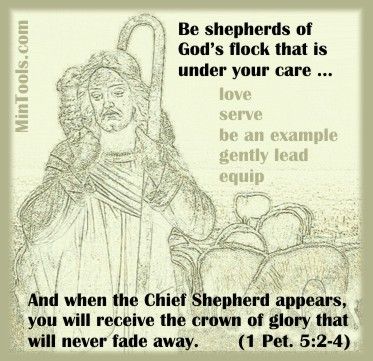 Shepherd the flock of God among you, exercising oversight not under compulsion, but voluntarily, according to the will of God; and not for sordid gain, but with eagerness; nor yet as lording it over those allotted to your charge, but proving to be examples to the flock. And when the Chief Shepherd appears, you will receive the unfading crown of glory. (1 Pet. 5:2-4, NASB)
Shepherds Exercise Oversight, Not Control
In our role as shepherds, we don’t have to be the ones to develop all the policies. We can pull upon others in the Body to determine what policies we need and how to best write them. We may set some guidelines and provide input, but we don’t micromanage the process. Policies represent the Body rather than reflect leadership.
Shepherding also affects the way leaders enforce policies, guarding their attitudes and motives. We use policies as a tool rather than a battering rod.
Shepherds Use Policies to Provide for and Protect Because They Care
Because shepherds care about the sheep, they do what’s for the good of the sheep. Sometimes parameters must be put in place to protect the Body so we reach the potential God has for us. We care so much about God’s will and His people that we enforce policies even when it’s uncomfortable or unpopular.
Shepherds Remember That It’s About Aligning with the Chief Shepherd
Ultimate authority resides not in the policies, nor church leaders, but rather in the Chief Shepherd. We’re all accountable to Him so it’s not about what we think is best but what God says. Any policy making therefore needs to reflect God’s purposes and intent for the Body.
When leaders align with the Chief Shepherd’s heart, they willingly assume their role as under-shepherds in all they do, even policy making, because they care. People, not the policies, take priority. That means the process used to accomplish leadership responsibilities and tasks reflects His heart.
For More on These Topics:
All Posts about Policy Making:
- Policy Making Objectives
- Policy Making Parameters
- Policy Making & the Big Picture
- Policy Making & Freedom in Christ
- Policies with No Hidden Agendas
- Policies Reflecting Both Grace & Truth
- Church Policies & the Next Generation
- Don’t Let Policies Take on a Life of Their Own
- Spiritual Gifts in Determining Policies
- Spiritual Gifts for Writing Policies
- Spiritual Gifts Suited for Implementing Policies
- Turning to God or to Church Policies?
- God’s Your Defender, Not Your Church Policies
- Policies Shaped by the Gospel
- Policies Reflecting the Gospel
- Policies Shaped by Grace
- Policy-Making Safeguarded by Grace
- Why Policies When We Have God’s Word?
- Power to Maintain the Proper Focus in Policymaking
- Policies Reflecting the Resurrection
- Church Policies Done in the Name of the Lord Jesus
- Leadership Qualities that Positively Affect Policy Making
- Biblical Leadership Roles Positively Affect Policy Making
- Shepherding and Policy Making